ABOUT MY FEDERAL SERVICE FOR MY COUNTRY
(return to homepage)
|
MY USDOE PARTICLE FLOW RESEARCH LAB The Particle Flow Research Lab was the largest laboratory of the USDOE Pittsburgh Energy Technology Center (High Bay of Building 94). The Pittsburgh Energy Technology Center is now the Pittsburgh site of the USDOE National Energy Technology Laboratory. |

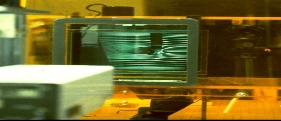
Wind tunnel of my Particle Flow Research Laboratory
|
The 511 nm and 578 nm beams
|
Atomic Vapor Laser built for me by Cem Gokay
|
|
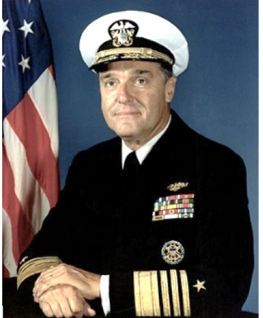
Fifth Secretary of Energy John S. Herrington, Assistant Secretary of the Navy. Attorney at Law. |
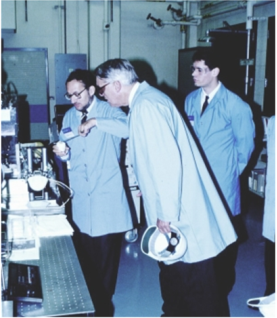
Because Atomic Vapor Lasers (copper-vapor lasers) are a technology used to develop nuclear weapons using the Atomic Vapor Isotope Separation (AVLIS) process, and because mine was built by engineers who built them for Los Alamos, my procurement of an AVL had to be approved by the Fifth Secretary of Energy John S. Herrington. In 1992, the Sixth Secretary of Energy Four Star Admiral James D. Watkins visited my lab to see my work with the Atomic Vapor Laser. |
Sixth Secretary of Energy
|
|
|
|
|
|
|
|
In 2002, Dr. Borovetz co - founded the Department of Bioengineering at the University of Pittsburgh. He served as its first Chairperson from 2002 through 2013. The Bioengineering Department is hugely successful. It now has over 200 graduate students.
Harvey is also a co-founder of the
McGowan Institute for Regenerative Medicine
, where he holds the position of
|
|
|
Below is a list of my publications with Dr. Borovetz in the peer-reviewed Journal of the American Society of Artificial Internal Organs: Fluorescent Image Tracking Velocimetry of the Nimbus Axipump , J. Kerrigan, F. Shaffer, F., H. Borovetz, et al. Journal of the American Society of Artificial Internal Organs, 1993 Respiratory Dialysis: A New Concept in Pulmonary Support , Brack Hattler, Franklin Shaffer, Harvey Borovetz, et al., Journal of the American Society of Artificial Internal Organs, Vol. 38, No.3, 1992 Development of an Axial Flow Blood Pump, Kenneth Clark Butler, Franklin Shaffer, Harvey Borovetz, James Antaki et al. Journal of the American Society of Artificial Internal Organs, Vol. 38, No.3, 1992 Optimal Management of a Ventricular Assist System , John Woodard, Franklin Shaffer, Richard Schuab, Laura Lund, and Harvey Borovetz, Journal of the American Society of Artificial Internal Organs, Vol. 38, No.3, 1992 And in other venues: |
|
|
I used Nd:Yag (Neodymium-doped Yttrium Aluminum Garnet) lasers, acousto-optically modulated Argon ion lasers, and an Atomic Vapor Laser (copper-vapor laser) as pulsed illumination sources for high-speed visualization of particle flows (Particle Image Velocimetry and Particle Tracking Velocimetry). Copper-vapor lasers are also known as “Atomic Vapor Lasers” because they are used to “pump” tunable dye lasers in the Atomic Vapor Laser Isotope Separation process (AVLIS) to enrich uranium for nuclear weapons. The best Electrical Engineer I’ve worked with, Cem Gokay, built my AVL. He built 200 AVL’s for the DOE Los Alamos National Laboratory to use for the AVLIS process. As far as I know, mine was the first he built strictly for civilian applications. |
|
|
Copper vapor lasers pumping tunable dye lasers in the AVLIS process at the USDOE Lawrence Livermore National Lab |
My copper-vapor laser illuminating flow fields
|
|
With 30 nanosecond pulses at 10,000 per second and with astronomical peak power for 2-3 nanoseconds during each pulse, AVL’s were the only pulsed laser source that produced enough pulse energy to expose the photo-electric image sensors in the available cameras. Dr. Everett Ramer, a PhD Nuclear Engineer, did the Mie Theory light scattering computations to predict the pulse energy requirements for small (10-100 mm) refractive particles. In our paper “ Development of Pulsed Laser Velocimetry Systems with Photo-Electric Image Sensors ” Everett presents the results in a form that engineers could use to predict pulse energies requirements without knowing how to do Mie Theory radiation calculations. |
|
|
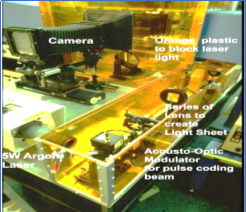
I also used 10W Argon continuous-beam lasers with acousto-optic modulators to pulse-code the beam. To visualize particle flows near light-scattering surfaces, I used polystyrene particles doped with Rhodamine 6G as tracers; holographic notch filters to block the 488 nm and 514 nm Argon lines and pass the orange-red broad spectrum fluorescent emission from Rhodamine 6G into a high-speed camera. |
|
|
I learned of that technology while visiting the UK’s Harwell Atomic Energy Agency lab in Oxfordshire England. I have a patent on that technology for medical devices. Click here to see my Trip Report about my discussions of these technologies with engineers from Oxford Lasers and Britian’s Harwell Atomic Energy Agency. |
|
|
Aligning the 488nm and 514nm beams of an Argon ion laser for flow visualization of the Novacor Left Ventricular Assist Device |
My brother visiting my lab just after he got his Medical Degree: Dr. Douglas N. Shaffer, MD |
|
This page is in honor and memory of my friend and colleague of 25 years,
On January 8, 2014, Anthony was found dead in a barren field near the NETL Pittsburgh site. He was a victim of weaponized “workplace mobbing” by the NETL Law Department. I believe this to be the work of NETL Chief Counsel Susan E. Malie. Why? Because she did the same thing to me. After 41 months of attacks by Arnoni, Kelly, Malie, and McGough, I tried to end my life. I barely survived. |
|
|
Anthony with granddaughter |
Anthony and wife Julliane with their family |
Here’s a link to Anthony’s obituary
|
NETL Chief Counsel Susan E. Malie and Arnoni’s Gang did the same thing to me. After 41 months of their attacks, on April 7, 2019,
|

|
|
If you are having thoughts of ending your life, there is help available. Please call or text 988 or just
|
It is always darkest before the dawn…
ABOUT MY FEDERAL SERVICE FOR MY COUNTRY (return to homepage)